- English
- Español
- Português
- русский
- Français
- 日本語
- Deutsch
- tiếng Việt
- Italiano
- Nederlands
- ภาษาไทย
- Polski
- 한국어
- Svenska
- magyar
- Malay
- বাংলা ভাষার
- Dansk
- Suomi
- हिन्दी
- Pilipino
- Türkçe
- Gaeilge
- العربية
- Indonesia
- Norsk
- تمل
- český
- ελληνικά
- український
- Javanese
- فارسی
- தமிழ்
- తెలుగు
- नेपाली
- Burmese
- български
- ລາວ
- Latine
- Қазақша
- Euskal
- Azərbaycan
- Slovenský jazyk
- Македонски
- Lietuvos
- Eesti Keel
- Română
- Slovenski
- मराठी
- Srpski језик

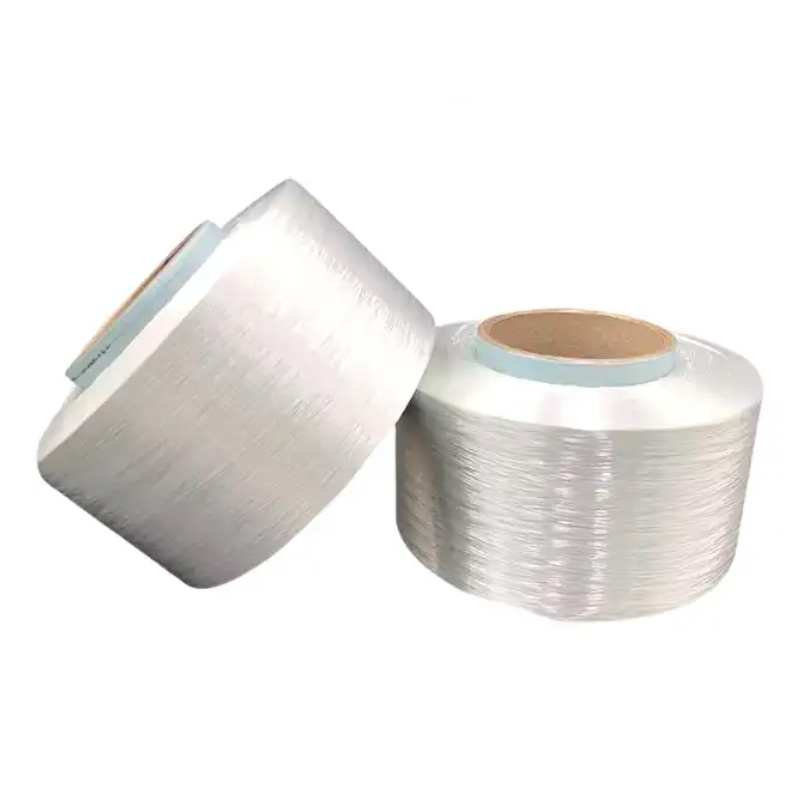
How Is Hot Melt Polyester Yarn Applied in Industrial Textile Production?
Abstract
Hot Melt Polyester Yarn is a functional textile material engineered with a low-melting-point component that enables thermal bonding without additional adhesives. It is widely used in automotive interiors, footwear, filtration systems, home textiles, and composite materials. This article explains its working principle, processing methods, key benefits, application scenarios, and selection guidelines. It also addresses common buyer concerns such as bonding strength, processing temperature, durability, and cost efficiency, helping manufacturers make informed sourcing decisions.
Outline
- Introduction to Hot Melt Polyester Yarn
- Working Principle and Material Structure
- Key Advantages in Industrial Applications
- Manufacturing and Processing Methods
- Application Scenarios Across Industries
- Technical Comparison Table
- Selection and Purchasing Considerations
- Common Problems and Solutions
- Frequently Asked Questions
- Conclusion and Supplier Information
Table of Contents
1. What Is Hot Melt Polyester Yarn?
Hot Melt Polyester Yarn is a specialized composite filament designed with a dual-component structure. One component maintains a high melting point for structural strength, while the other melts at a lower temperature to create bonding points during heat treatment. This eliminates the need for chemical adhesives in many textile and composite processes.
Unlike traditional polyester yarn, this material is engineered for thermal activation. Once exposed to controlled heat, the low-melt portion softens and fuses adjacent fibers, creating a stable and durable structure.
2. How It Works in Thermal Bonding
The core mechanism of Hot Melt Polyester Yarn is based on controlled thermal fusion. When heated to a specific activation temperature, the low-melting sheath component transitions from solid to semi-liquid, allowing it to bond fibers together.
Process Flow:
- Step 1: Yarn is woven or knitted into a fabric structure
- Step 2: Heat is applied through oven, press, or hot air system
- Step 3: Low-melt polymer softens and flows
- Step 4: Cooling solidifies bonding points
- Step 5: Final structure gains strength and stability
This mechanism significantly improves production efficiency and reduces dependency on chemical binders.
3. Key Advantages for Manufacturers
- Eco-friendly production: Reduces or eliminates chemical adhesives
- Lower processing cost: Minimizes additional bonding materials
- High structural stability: Strong fiber interlocking after cooling
- Improved efficiency: Faster production cycles
- Versatile compatibility: Works with nonwoven, woven, and composite systems
For manufacturers like Yida, this yarn offers a strategic advantage in producing high-performance textile materials for global markets.
4. Industrial Processing Methods
Hot Melt Polyester Yarn can be processed using multiple thermal bonding techniques depending on the end-use application.
| Processing Method | Description | Typical Use |
|---|---|---|
| Hot Press Bonding | Uses pressure and heat to activate bonding fibers | Automotive interiors, composite panels |
| Hot Air Oven | Uniform heating for large fabric rolls | Nonwoven fabrics, filtration materials |
| Calendering | Roller-based thermal fusion process | Geotextiles, insulation layers |
| Ultrasonic Welding | Localized heat generation through vibration | Precision textile assembly |
Each method offers unique advantages depending on required bonding strength, fabric thickness, and production scale.
5. Application Scenarios
Hot Melt Polyester Yarn is widely adopted across multiple industries due to its versatility and mechanical performance.
- Automotive Industry: Seat cushions, door panels, headliners
- Footwear Manufacturing: Structural reinforcement, lining fabrics
- Filtration Systems: Air and liquid filter media
- Home Textiles: Mattresses, upholstery, curtains
- Industrial Composites: Reinforcement layers for engineering materials
In each application, the yarn improves dimensional stability while reducing production complexity.
6. Technical Comparison
| Property | Hot Melt Polyester Yarn | Conventional Polyester Yarn |
|---|---|---|
| Bonding Method | Thermal fusion | Requires adhesives or stitching |
| Production Efficiency | High | Medium |
| Environmental Impact | Lower chemical usage | Higher due to adhesives |
| Structural Strength | Enhanced bonding points | Dependent on stitching density |
7. Selection Guidelines
When selecting Hot Melt Polyester Yarn, manufacturers should evaluate several critical parameters to ensure optimal performance.
- Melting point range: Must align with production equipment capability
- Denier specification: Influences fabric strength and texture
- Bonding ratio: Affects final structural rigidity
- Application environment: Temperature, humidity, mechanical stress
Suppliers such as Yida provide customized solutions to match diverse industrial requirements, ensuring consistent quality across production batches.
8. Common Issues & Solutions
- Weak bonding strength: Increase thermal exposure time or adjust temperature profile
- Uneven melting: Improve heat distribution in equipment
- Fiber shrinkage: Optimize cooling rate after bonding
- Compatibility issues: Ensure fiber blending ratios are properly engineered
Proper process calibration is essential to achieve stable and repeatable results in industrial environments.
9. Frequently Asked Questions
Q1: What temperature is required for activation?
A typical range is 110°C–180°C depending on polymer composition.
Q2: Can it replace adhesives completely?
In many applications, yes. However, extreme load-bearing structures may still require hybrid reinforcement.
Q3: Is it suitable for eco-friendly manufacturing?
Yes. It reduces chemical adhesive usage and improves recyclability.
Q4: What industries benefit the most?
Automotive, filtration, home textiles, and composite manufacturing are primary sectors.
Conclusion
Hot Melt Polyester Yarn represents a significant advancement in textile engineering by enabling clean, efficient, and high-strength bonding through thermal activation. Its adaptability across industries makes it a preferred material for manufacturers seeking performance and sustainability improvements.
For high-quality sourcing and technical support, Yida provides reliable production capability and tailored solutions for industrial clients worldwide.
If you are looking to optimize your textile production efficiency and material performance, contact us today to explore customized Hot Melt Polyester Yarn solutions designed for your industry needs.
Previous:No News